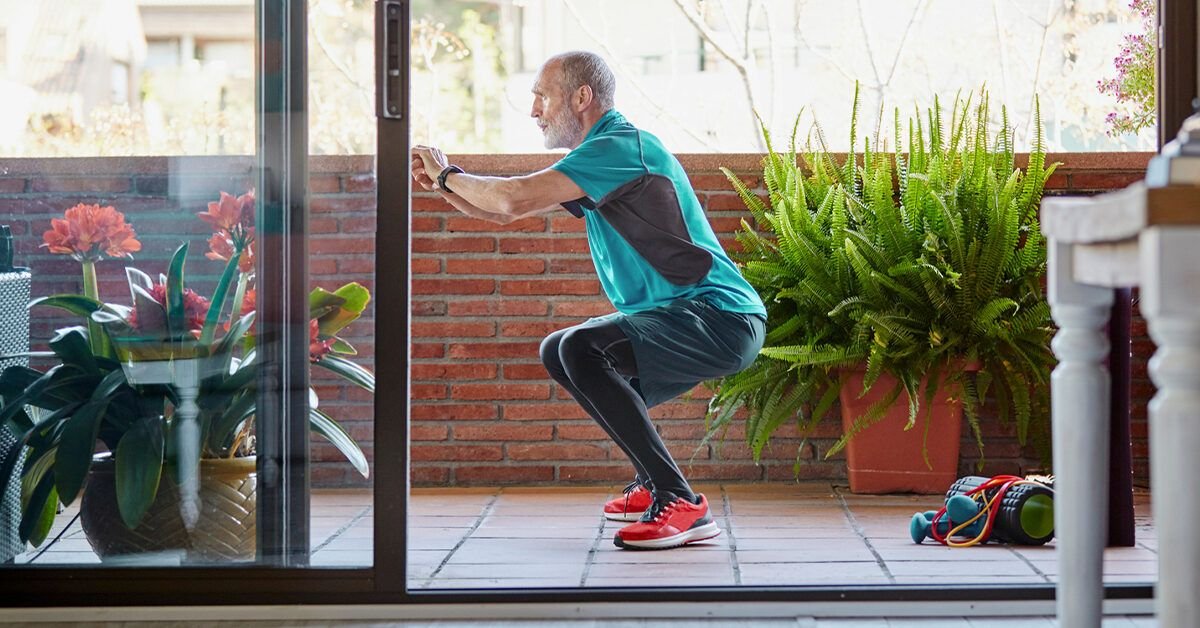
As the human body ages, it undergoes a series of predictable physiological shifts that can gradually diminish functional mobility, vigor, and overall quality of life. Among the most impactful of these changes is sarcopenia—the age-related loss of skeletal muscle mass, strength, and tissue quality—which typically begins as early as the fourth decade of life and accelerates significantly after age sixty. Left unaddressed, this loss of muscle tissue directly compromises physical independence, making basic daily activities such as standing up from a low armchair, climbing a flight of stairs, carrying bags of groceries, or lifting objects overhead progressively more challenging.
Despite common misperceptions that vigorous exercise should be dialed back in later years, modern exercise science demonstrates the precise opposite: target-driven physical training is one of the most powerful medical tools available for promoting longevity and functional vitality. Older adults retain a remarkable capacity for neuromuscular adaptation. When exposed to appropriate physical stress through resistance exercises and mobility routines, aging muscles adapt by recruiting dormant motor units, synthesizing structural proteins, and reinforcing connective structures. This capacity for positive adaptation remains intact into an individual’s eighties, nineties, and beyond.
Importantly, tapping into these transformative health outcomes does not require expensive gym memberships, specialized machinery, or heavy iron weights. A structured, thoughtfully designed at-home training program utilizing simple resistance bands, bodyweight leverage, household props, and targeted mobility routines can yield extraordinary health gains. By committing to a consistent, evidence-based home exercise routine, older adults can build resilient muscles, safeguard bone density, improve static and dynamic balance, reduce chronic joint discomfort, and protect the independent lifestyle they treasure.
What It Is & How It Works
At its core, strength training—often referred to as resistance training—involves moving the body against an opposing force to stimulate physiological adaptation. When a muscle contracts against resistance, micro-level mechanical tension is applied to the muscle fibers. The body recognizes this strain as a stimulus to repair and reinforce the tissue, activating satellite cells that repair muscle fibers, increase cellular protein synthesis, and optimize motor unit recruitment. For older adults, this neural enhancement is particularly significant: much of the initial gain in functional strength stems from the nervous system becoming significantly more efficient at activating existing muscle fibers simultaneously.
Flexibility and mobility work complement resistance training by directly targeting the soft tissues surrounding joints, including tendons, ligaments, and fascia. Age-related collagen stiffening and sedentary habits often lead to joint capsule constriction, particularly around the hips, thoracic spine, shoulders, and ankles. Gentle, controlled stretching facilitates synovial fluid circulation within the joint capsule, nourishing cartilage and restoring full functional range of motion. When resistance training and flexibility exercises are combined, they create an active dynamic support system around major joints, absorbing impact forces and distributing mechanical stress evenly across kinetic chains.
Key Benefits of At-Home Resistance and Flexibility Training
- Mitigation of Sarcopenia and Muscle Atrophy: Regular resistance exercise stimulates muscle protein synthesis, arresting and reversing the steady decline of skeletal muscle mass.
- Enhancement of Bone Mineral Density: Mechanical loading during standing exercises exerts structural strain on bones, triggering osteoblast activity that lays down new bone matrix and helps protect against osteopenia and osteoporosis.
- Superior Balance and Fall Prevention: Strengthening stabilizing muscles in the core, hips, and lower legs improves proprioception—the body’s ability to sense its position in space—significantly lowering the risk of life-altering falls.
- Joint Health and Pain Reduction: Strengthening the muscles surrounding arthritic or worn joints reduces direct cartilage compression, offering substantial relief from conditions like knee and hip osteoarthritis.
- Metabolic and Cardiovascular Regulation: Skeletal muscle serves as the body’s primary site for glucose storage; expanding and activating muscle tissue improves insulin sensitivity, aiding in blood sugar management and vascular health.
- Cognitive Function and Mental Wellbeing: Physical movement stimulates the release of Brain-Derived Neurotrophic Factor (BDNF), a key growth factor that supports neuroplasticity, memory retention, and mood regulation.
The collective evidence supporting strength and flexibility training for seniors is overwhelming. Research consistently demonstrates that physical frailty is not an inevitable outcome of chronological aging, but rather a reversible consequence of disuse. By placing controlled demands on the muscular, skeletal, and nervous systems, older adults can preserve functional reserve—the physiological cushion that allows an individual to recover smoothly from illness, stress, or temporary physical setbacks.
Designing an Effective Weekly At-Home Routine
Building a successful home exercise routine requires balancing sufficient physical stimulation with adequate recovery time. The human body adapts during periods of rest, not during the workout itself. For beginners, a schedule that alternates between strength-focused days, dedicated mobility practice, and active recovery provides optimal results while minimizing systemic fatigue or overuse injuries.
A balanced weekly structure for older adults should aim for two to three non-consecutive days of full-body strength training, interspersed with gentle mobility sessions, walking, or enjoyable hobbies like gardening. The sample weekly framework below illustrates how to structure these activities harmoniously:
- Monday: Full-Body Strength Training (25 to 35 minutes targeting major muscle groups with controlled resistance).
- Tuesday: Focused Flexibility and Joint Mobility (15 to 20 minutes of gentle static and dynamic stretching).
- Wednesday: Low-Impact Cardiovascular Activity or Active Recovery (a 20-to-30-minute steady-paced walk, water aerobics, or active outdoor hobbies).
- Thursday: Full-Body Strength Training (25 to 35 minutes emphasizing controlled movement execution and balance).
- Friday: Flexibility, Posture, and Core Stability (15 to 20 minutes focusing on thoracic spine extension, chest opening, and hip flexibility).
- Saturday: Recreational Light Movement (enjoyable recreational activities, light walking, or balance-focused play).
- Sunday: Complete Rest and Systemic Recovery (allowing tissue repair and mental recharge).
Before starting any exercise session, it is critical to perform a brief five-to-ten-minute warm-up. A proper warm-up raises core body temperature, increases heart rate gradually, and lubricates joint capsules with synovial fluid. Effective warm-up movements include march-in-place variations, gentle arm circles, shoulder rolls, and side-to-side torso sways. Similarly, ending a strength session with slow breathing and gentle stretching helps return the autonomic nervous system to a restful state.
Step-by-Step Exercise Protocols and Safe Modifications
The following full-body exercise suite covers foundational movement patterns required for independent living: pushing, pulling, squatting, hip hinging, and stabilizing the core. Each exercise can be performed using basic household items, body weight, or simple resistance bands.
1. The Chair Sit-to-Stand (Squat Variation)
This fundamental pattern strengthens the quadriceps, gluteal muscles, and core, mimicking the biomechanics required to rise from a chair, couch, or toilet independently.
- Setup: Sit upright on the front third of a sturdy, non-wheeled chair. Place your feet flat on the floor, hip-width apart, with knees aligned over your ankles. Cross your arms over your chest or hold them straight out for balance.
- Execution: Lean slightly forward from your hips while keeping your spine straight. Press down firmly through your entire foot—heel to toe—and push up into a full standing position. Squeeze your glutes at the top. Pause briefly, then slowly reverse the movement, controlling your descent until your glutes lightly contact the chair seat.
- Volume: Perform 2 to 3 sets of 8 to 12 controlled repetitions. Rest 60 to 90 seconds between sets.
- Modification: If rising without assistance is too difficult, place hands on the chair arms or thighs to push off gently, or place a dense cushion on the seat to raise the starting surface height.
2. The Wall or Incline Push-Up
An exceptional upper-body exercise that develops the chest, anterior shoulders, triceps, and abdominal core without placing excessive stress on the wrist or lower back joints.
- Setup: Stand facing a clear wall, roughly arm’s length away. Place your palms flat on the wall at shoulder height and slightly wider than shoulder-width apart. Engage your core so your body forms a straight line from ears to ankles.
- Execution: Inhale as you bend your elbows, slowly lowering your chest toward the wall over a count of three seconds. Keep your elbows tucked at roughly a 45-degree angle to your body rather than flaring them straight out. Pause briefly when your forehead or nose approaches the wall, then exhale as you push firmly away until your arms are straight but not locked out.
- Volume: Perform 2 to 3 sets of 10 to 12 repetitions.
- Modification: To make the exercise easier, stand closer to the wall. To increase the challenge, step farther back from the wall or perform the movement against a sturdy, elevated kitchen countertop.
3. Seated Resistance Band Row
Targeting the upper back, posterior shoulder deltoids, and postural stabilizers, this exercise counteracts the forward-slumped posture common in modern sedentary lifestyles.
- Setup: Sit upright on a chair with legs extended out in front of you, heels resting on the floor. Loop the middle of a resistance band securely under the arches of your shoes. Hold one handle or end of the band in each hand, creating slight tension while your arms are extended.
- Execution: Sit tall, lift your chest, and pull your shoulder blades gently down and back. Inhale, then exhale as you pull the band handles back toward your ribcage, driving your elbows straight back. Focus on squeezing your shoulder blades together at the peak contraction. Hold for one second, then slowly lower forward over two to three seconds.
- Volume: Perform 2 to 3 sets of 10 to 12 reps.
- Modification: Adjust the resistance by choking up higher on the band to increase tension, or gripping closer to the handles to reduce it.
4. Supported Glute Bridge
Designed to isolate and activate the gluteus maximus and hamstrings while supporting the lumbar spine, protecting against lower back strain and improving pelvic alignment.
- Setup: Lie on your back on a comfortable exercise mat or carpeted floor with your knees bent and feet flat on the floor, hip-width apart. Place your arms flat at your sides, palms facing down.
- Execution: Press your lower back flat into the floor to engage your core. Drive down through your heels and lift your hips toward the ceiling until your body forms a straight line from your shoulders to your knees. Avoid arching your lower back at the top; the lift should be driven by glute contraction. Hold for two seconds, then slowly lower your hips to the start.
- Volume: Perform 2 to 3 sets of 10 to 12 reps.
- Modification: If getting down onto the floor is unmanageable, this exercise can be performed on a firm mattress or modified into a standing hip extension holding onto a counter.
5. Standing Heel Raise and Balance Hold
Strengthens the gastrocnemius, soleus, and stabilizing intrinsic foot muscles while training postural control mechanisms in the brain.
- Setup: Stand tall behind a sturdy chair or kitchen counter, lightly resting your fingertips on the surface for balance assistance. Space your feet hip-width apart.
- Execution: Slowly push up onto the balls of your feet, raising your heels as high as comfortably possible. Hold this top position for two to three seconds, focusing your eyes on a fixed spot straight ahead. Slowly lower your heels back to the floor. After completing heel raises, attempt a 15-second single-leg balance hold on each leg, maintaining light fingertip contact on the counter as needed.
- Volume: Perform 2 to 3 sets of 12 to 15 heel raises, followed by 2 balance holds per leg.
- Safety Tip: Always maintain close proximity to a secure balance point to prevent loss of stability.
Essential Mobility & Stretching Routine
Incorporate these static stretches after workouts or on mobility days to reduce muscular tension and maintain joint range of motion. Each stretch should be held for 20 to 30 seconds without bouncing, accompanied by deep, rhythmic breathing.
- Doorway Chest Opener: Stand in an open doorway, bend your elbow to 90 degrees, and place your forearm flat against the doorframe. Step lightly forward with one foot until you feel a gentle, opening stretch across your chest and front shoulder.
- Seated Hamstring Stretch: Sit at the front edge of a sturdy chair. Extend one leg straight out with your heel resting on the floor and toes pointed upward. Keeping your back flat, hinge forward from your hips until you feel a comfortable stretch along the back of your thigh.
- Seated Torso Twist: Sit upright in a chair with feet flat on the floor. Place your right hand on the outside of your left knee and gently rotate your upper body toward the left side, using your back hand on the chair for support. Keep your spine long and crown of the head lifting upward. Repeat on the opposite side.
Frequently Asked Questions About Senior Fitness
How heavy should weights or resistance bands be for seniors starting out?
When initiating an at-home strength program, safety and correct form must always take priority over resistance magnitude. Seniors should start with light resistance—such as light-to-medium tension bands, 2-to-3-pound dumbbells, or even simple household items like canned goods or filled water bottles. A good rule of thumb is utilizing the Rate of Perceived Exertion (RPE) scale, ranging from 1 (no effort) to 10 (maximum effort). Your working sets should feel like a 5 to 7 on this scale—challenging enough that the last two repetitions require focused effort, but easy enough that you maintain proper form without breath-holding or straining.
Is strength training safe if I have arthritis, joint pain, or osteoporosis?
Yes, strength training is not only safe for individuals with arthritis, joint pain, or osteoporosis—it is actively recommended by major medical and orthopedic associations. Building strong muscles around arthritic joints helps absorb mechanical shock, reducing joint irritation and stiffness. For individuals with osteoporosis, weight-bearing and resistance training stimulates bone retention. However, modifications are crucial: individuals with joint issues should perform movements within a pain-free range of motion, avoid explosive movements, and skip excessive spinal flexion or high-impact jumping exercises. Always consult your healthcare provider or a physical therapist prior to beginning a new program to tailor exercises to your specific clinical history.
How long does it take for older adults to see noticeable improvements in strength and balance?
Neuromuscular adaptations occur relatively rapidly. Most seniors who practice resistance exercises two to three times per week report noticeable improvements in functional stability, balance, and energy within three to four weeks. Physical improvements in muscular endurance—such as climbing stairs with less fatigue—often appear first due to neural efficiency gains. Measurable increases in muscle tissue volume and structural bone density typically emerge after eight to twelve weeks of consistent training. The key to sustaining these gains long-term is progressive overload: gradually increasing repetitions, holding stretches slightly longer, or subtly increasing band tension as your body adapts.
Conclusion & Final Takeaways
Embarking on a strength and flexibility routine in your later years is one of the most empowering choices you can make for your personal health, autonomy, and long-term wellbeing. Aging does not signify an inevitable decline into frailty; rather, it presents an opportunity to cultivate bodily resilience through targeted, sensible physical practice. By spending just a few short sessions each week engaging in structured home exercises, you actively invest in your ability to move smoothly, prevent debilitating falls, manage chronic pain, and maintain full independence in your home and community.
Remember that consistency always trumps intensity. Starting slowly, mastering movement mechanics, listening to your body’s feedback, and celebrating incremental victories will ensure your fitness journey is safe, sustainable, and enjoyable. Equip yourself with patience and commitment, utilize the practical routines outlined in this guide, and recognize that it is never too late to build a stronger, healthier, and more vibrant foundation for the years ahead.
Leave a Reply